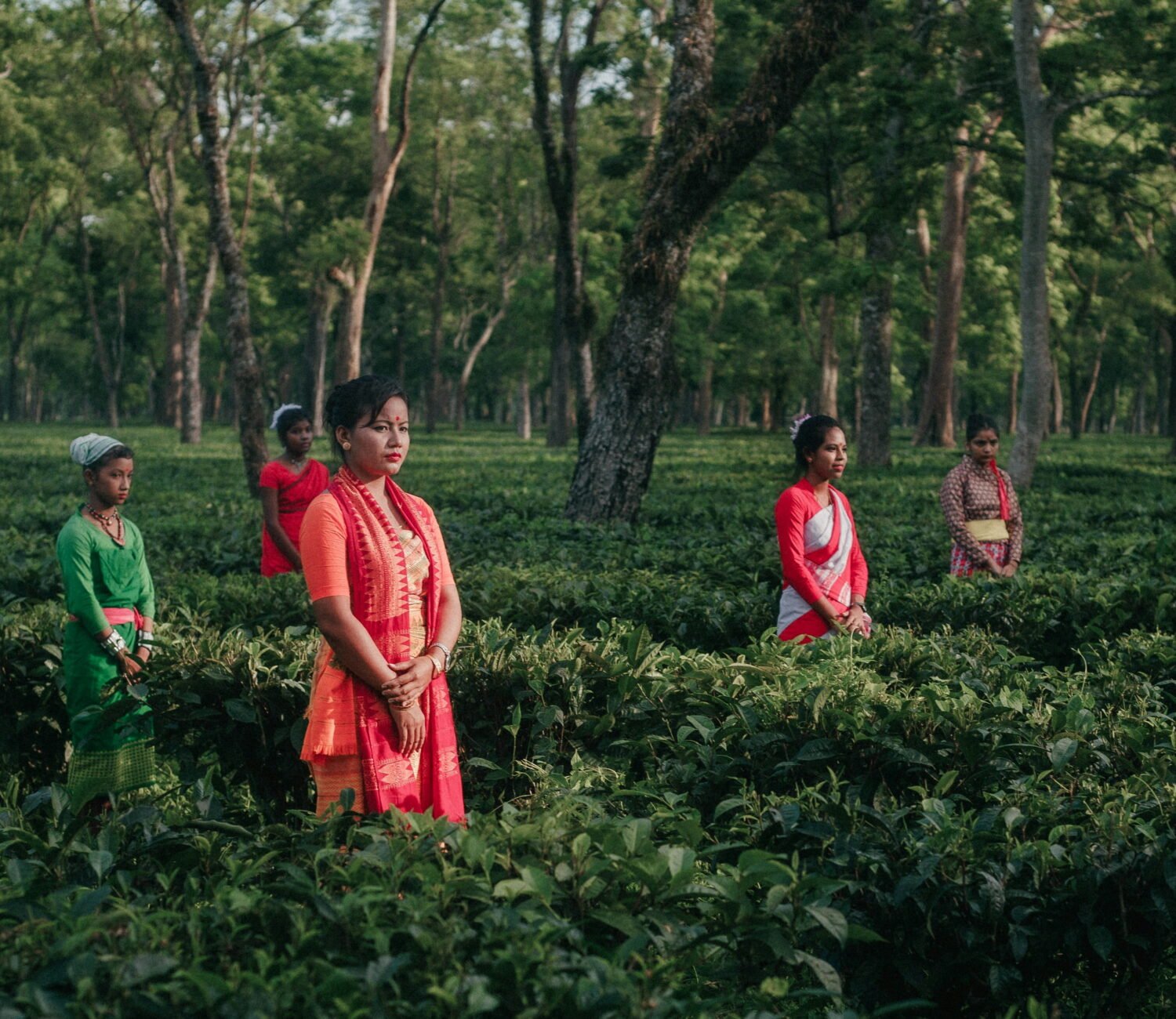
Assam tea is a black tea grown in the fertile Brahmaputra valley in the state of Assam in northeast India. The region is warm, humid and rainy, and that climate gives the leaves their famously bold character. It is known for a rich, malty and brisk taste, a deep reddish amber colour and a strong aroma that wakes you up the moment hot water touches the leaf.
Assam is one of the most important tea growing regions in India, and a very large share of the tea we drink at home comes from here. It is the tea behind countless cups of kadak masala chai, and it is also a key ingredient in many breakfast blends enjoyed around the world, which means you have most likely had Assam tea even if you never noticed it. Whether you like it strong with milk and spices or plain and slow, Assam is a tea that never goes unnoticed.
I am a tea enthusiast and not a tea scientist, so I will keep this simple and share what I have learned while exploring teas.

Origins: Where Does Assam Tea Come From?
Assam is one of the very few places in the world where tea plants grow naturally. The local Assam tea plant is a variety called Camellia sinensis var. assamica, and it is a little different from the Chinese tea plant. Its leaves are bigger and it grows tall and sturdy, which is why it makes such a bold cup.
Long before tea became a business, local communities such as the Singpho and Khamti people were already brewing and eating tea leaves from these wild plants.
How Was Assam Tea Discovered?
The story most people know goes like this. In 1823, a Scottish trader named Robert Bruce came to Assam. A local nobleman, Maniram Dewan, is said to have pointed him towards a Singpho chief, who showed him the tea plants his people used for making a drink.
Robert Bruce passed away in 1824. His younger brother, Charles Alexander Bruce, carried the work forward, collected plants and seeds from the Singpho and set up nurseries. It took a few years for the plant to be properly recognised as tea. In 1838, a small first batch of Assam tea was sent to London, and it was auctioned there on 10 January 1839. That same year, the Assam Company was formed, which is considered the first tea company of India.
Who Founded Assam Tea?

Honestly, no single person. The Singpho and Khamti people were the first to use the plant. Robert Bruce and Charles Alexander Bruce are credited with bringing it to the world’s attention. Maniram Dewan is remembered as the first Indian tea planter, and many people believe he deserves far more credit than history books gave him.
The history of tea in Assam also has a difficult side connected to labour and colonial rule, and it is worth reading about if you want the full picture.
Appearance and Taste Notes
Dry leaf: Assam comes in two main styles. CTC Assam looks like small, dark granules and brews fast and strong. Orthodox Assam has longer, twisted leaves, and the best ones show golden tips, which are young buds.
Liquor colour: A deep, rich reddish amber to dark brown.
Aroma: Warm, malty, sometimes with a hint of honey.
Taste: Full bodied, bold and brisk, with a malty backbone. Second flush Assam, picked around May and June, is often considered the best, with a smoother, sweeter and more rounded character.
What Makes Assam Tea So Special?
- Strong, malty flavour. It stands up beautifully to milk, sugar and spices without disappearing.
- Native plant. It comes from a tea plant that grows naturally in the region.
- Versatile. It works as a milk chai, a black tea, an iced tea and even a latte.
- Everyday favourite. A large share of India’s tea comes from Assam, so it is part of countless homes and mornings.
Health Benefits of Assam Tea
Assam tea is a black tea made from the tea plant, so it naturally contains caffeine and plant compounds such as polyphenols, which are often described as antioxidants. Here is what people generally enjoy about it.
- A gentle lift. Assam has caffeine, usually less than a cup of coffee, though it depends on how strong you brew it. Many people like it as a morning or afternoon pick me up.
- Natural plant compounds. Black tea contains compounds like theaflavins, which form when the leaf is oxidised during processing.
- Counts towards your fluids. A cup of tea is mostly water, so it is an easy way to sip through the day.
- A comforting ritual. For many of us, a warm cup of Assam is as much about taking a break as it is about the tea itself.
How you make it matters too. A cup with lots of sugar will not be the same as a lightly sweetened or plain one, and very strong tea on an empty stomach does not suit everyone. If you are sensitive to caffeine, you may want to avoid it late in the evening.
I am not a doctor or a nutritionist, so please treat this as general information and not medical advice. If you have a health condition, are pregnant or are unsure how much tea is right for you, check with your doctor.
Different Ways of Drinking Assam Tea
- Classic milk chai: boiled with milk and sugar for that kadak taste.
- Masala chai: with ginger, cardamom and other spices.
- Plain black tea: with a little jaggery, honey or a squeeze of lemon.
- Iced tea: brewed strong, cooled and served over ice with lemon.
- Cold brew: steeped in cold water in the fridge for a smooth, naturally sweet cup.
- Tea latte: strong Assam topped with steamed or frothed milk.
How to Make Assam Tea at Home
Plain black Assam tea
- Take about 1 teaspoon of loose leaf Assam tea for one cup.
- Heat fresh water until it is boiling.
- Pour the hot water over the leaves and steep for about 3 minutes.
- Strain and sip as it is, or add a little sweetener or lemon.
Kadak Assam milk chai
- Boil 1 cup of water with 1 teaspoon of Assam tea for 2 to 3 minutes.
- Add half a cup of milk and your sugar.
- Let it simmer for 1 to 2 minutes until it turns a rich colour.
- Strain and serve hot.
Assam cold brew
- Add 2 teaspoons of Assam tea to a bottle of cold water.
- Keep it in the fridge for 3 to 5 hours.
- Strain and pour over ice. Add lemon if you like.
A Few Handy Tips
- Choose fresh, good quality leaf. Loose leaf with golden tips usually brews a lovelier cup than dust grade tea.
- Do not over steep plain Assam, or it can turn bitter.
- Store your tea in an airtight tin, away from sunlight and moisture.
- Assam is also a main ingredient in many breakfast blends, so you may have been drinking it without knowing.
Quick Frequently Asked Questions
Is Assam tea black tea? Yes, Assam tea is a black tea.
Is Assam tea strong? It is one of the stronger black teas, with a bold and malty taste.
Does Assam tea have caffeine? Yes, like other black teas, it contains caffeine.
What is the best time to drink Assam tea? Many people enjoy it in the morning or afternoon, but it is really up to you.
What is the difference between Assam and Darjeeling tea? Assam is bold, malty and strong. Darjeeling is light, floral and delicate.
Final Thoughts
Assam tea is bold, comforting and wonderfully versatile. Whether you like it kadak with milk or plain and slow, there is an Assam cup for every mood. If you have a favourite Assam tea or a special way of making it, tell me about it in the comments or on Instagram.
Loved this post? Follow me on Instagram for more tea stories, pairings and discoveries.
Sources for history: Wikipedia: Assam tea, Tocklai Tea Research Institute, Indian Culture portal