Tea in India Is So Much More Than Chai
Tea is my hobby. Like some people play cricket, I explore teas. And the more I explore, the more I realise that Indian tea is not one single thing. It is a whole world, from the kadak cutting chai on a Mumbai street corner to a delicate cup of Darjeeling sipped slowly on a quiet morning.
If you have ever wondered what the different types of tea in India are, and how that tea actually reaches your cup, this post is for you. I am not a tea scientist, just an enthusiast sharing what I have learned and tasted along the way. I will keep it simple.
The Famous Tea Regions of India
Indian tea is usually known by where it grows. Soil, altitude and weather change the flavour completely, which is why the same tea plant can taste so different from one hill to another.
1. Assam Tea
Assam is the biggest tea growing region in India. The tea here is bold, malty and strong, which is exactly why it is the base of most masala chai and breakfast teas. If you like a tea that holds up well with milk and sugar, Assam is usually your friend. Most of the tea in our everyday chai patti comes from Assam.
2. Darjeeling Tea
Darjeeling grows high up in the hills of West Bengal. This tea is light, floral and fragrant, and often has a gentle fruity note, sometimes described as muscatel. It is usually enjoyed without milk. Darjeeling is also picked in different seasons, which are called flushes:
- First flush: the early spring harvest. Very light, fresh and floral.
- Second flush: the summer harvest. A little fuller and rounder in taste.
- Autumn flush: the later harvest, which is mellow and smooth.
3. Nilgiri Tea
Nilgiri tea comes from the blue hills of Tamil Nadu in South India. It is brisk, smooth and fragrant, and many people find it very easy to drink. Nilgiri is also where some lovely whole leaf white teas and oolongs are being made now, which I find really exciting.
4. Kangra Tea
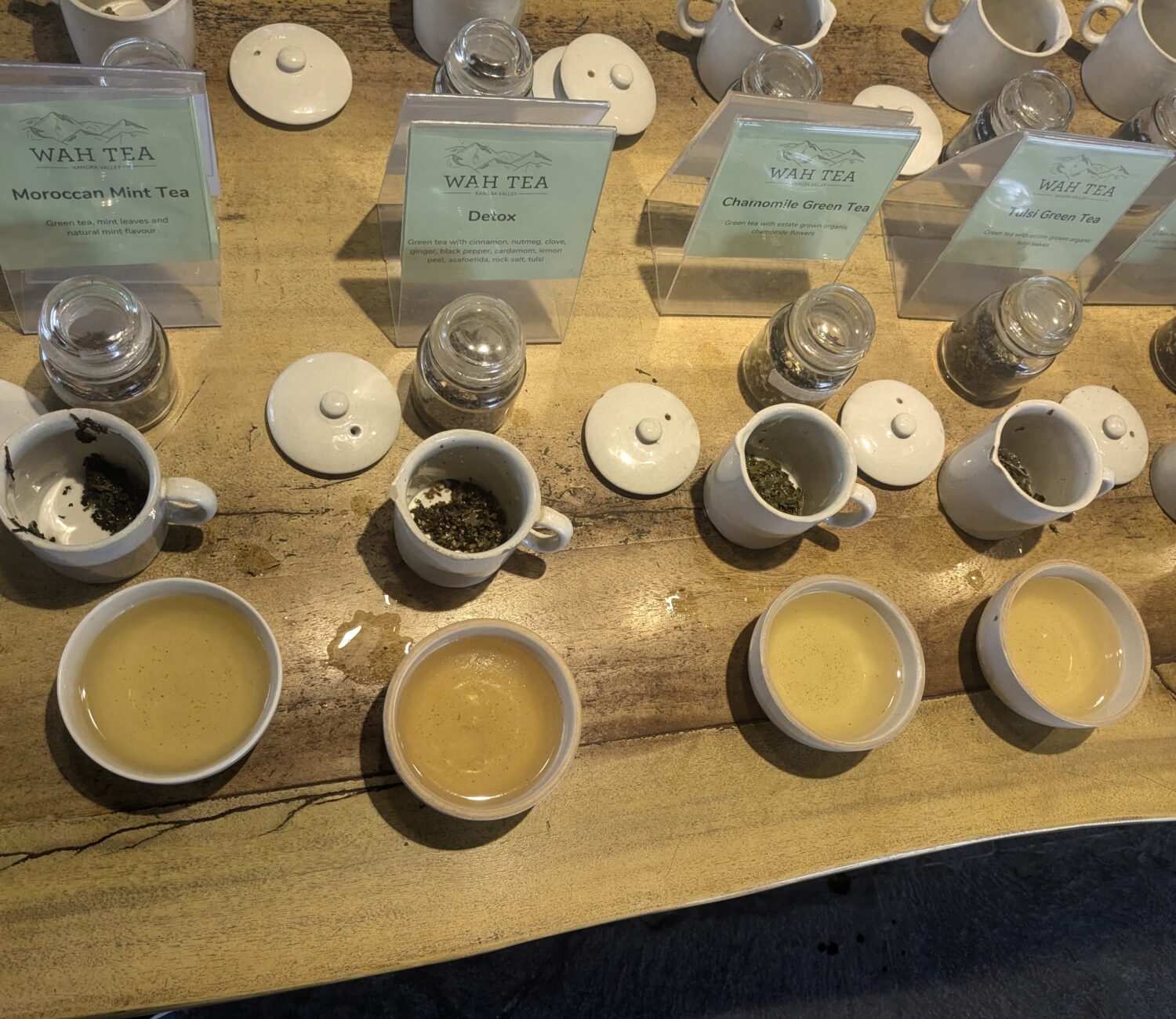
Grown in Himachal Pradesh, Kangra tea is a lesser known gem. It is mostly green tea, with a mild, slightly nutty and sweet character. I visited Palampur, and seeing these tea gardens up close made me love this tea even more.
5. Sikkim, Dooars and Terai Teas
Sikkim produces some lovely light, aromatic teas. Dooars and Terai in the foothills of West Bengal produce teas that are stronger and fuller, closer to Assam in style.
6. Munnar and Kerala Teas
Munnar in Kerala is famous for its rolling tea estates and is also a popular place for tea tourism in India.
Types of Tea by How They Are Processed
The region is one way to understand tea. The other way is by how the leaf is processed. Here is the part that surprised me the most: white, green, oolong and black tea all come from the same plant, Camellia sinensis. The difference is in how the leaf is handled after plucking.
- Black tea: fully oxidised, giving a dark colour and a strong, robust taste. Assam and most Indian chai teas fall here.
- Green tea: not oxidised, so it stays fresh, grassy and light.
- White tea: the least processed. Made from young leaves and buds, it is delicate and naturally sweet.
- Oolong tea: partly oxidised, so it sits somewhere between green and black, often floral and fruity.
- Herbal tea or tisane: this one is technically not tea at all, since it does not come from the tea plant. Tulsi, chamomile and hibiscus are examples.
How Is Tea Made in India? A Simple Step by Step
Here is the journey from the garden to your cup, in plain words.
Step 1: Plucking. Workers pick the top of the plant, usually the bud and the first two leaves. This is done by hand in most gardens, and the quality of the pluck matters a lot.
Step 2: Withering. The fresh leaves are spread out and left to lose some of their moisture. This makes them soft and ready to be shaped.
Step 3: Rolling or cutting. In orthodox tea, the leaves are gently rolled to break the cells and release flavour. In CTC tea, the leaves are put through machines that crush, tear and curl them into small pellets.
Step 4: Oxidation. The rolled leaves are exposed to air, and they slowly darken and develop flavour. For black tea this is fully done. For oolong it is stopped partway. For green tea this step is skipped completely, and heat is used to stop it.
Step 5: Drying. The leaves are dried with hot air to lock in the flavour and remove the remaining moisture.
Step 6: Sorting and grading. Finally the tea is sorted by leaf size and quality, then packed and sent out.
CTC vs Orthodox Tea: What Is the Difference?
This is something I get asked about a lot, and it is worth knowing.
CTC (crush, tear, curl) tea is made into small, hard granules. It brews fast and strong, and gives that deep colour and kadak taste we love in our daily chai. Most of what Indians drink at home is CTC.
Orthodox tea is made by rolling the leaf more gently, so you often see longer, more whole leaves. It brews a lighter, more layered cup and is usually enjoyed without milk. Most Darjeeling, Nilgiri whole leaf teas and specialty teas are orthodox.
Neither is right or wrong. CTC is perfect for a strong masala chai, and orthodox is lovely when you want to slow down and notice the flavours.
Popular Ways Indians Drink Tea
Beyond the types of tea leaves, India has its own style of serving tea. Masala chai, Irani chai, cutting chai, Kashmiri kahwa, Sulaimani and butter tea are all different ways of drinking tea, not different plants. Each region has its own way, and exploring them is half the fun for me.
Quick Frequently Asked Questions
What is the most popular tea in India? Black tea, especially Assam CTC, is the most commonly consumed in Indian homes, mostly as milk chai.
Which Indian tea is best without milk? Darjeeling and Nilgiri whole leaf teas are lovely plain, because they are light and aromatic.
Are green tea and black tea from the same plant? Yes. Both come from Camellia sinensis. The difference is only in processing.
What is first flush tea? It is the first harvest of the year, especially known in Darjeeling, with a light and fresh flavour.
Final Thoughts
Indian tea has been a part of us since the day we were born. Once you understand the regions, the leaf and how it is made, every cup tastes a little more interesting. You do not need to be an expert. You just need to be curious.
So the next time you pick up a cup of tea, take a moment to think about where it came from. And if you try something new after reading this, do tell me about it. I would love to know your favourite.
Loved this post? Follow me on Instagram for more tea stories, pairings and discoveries.